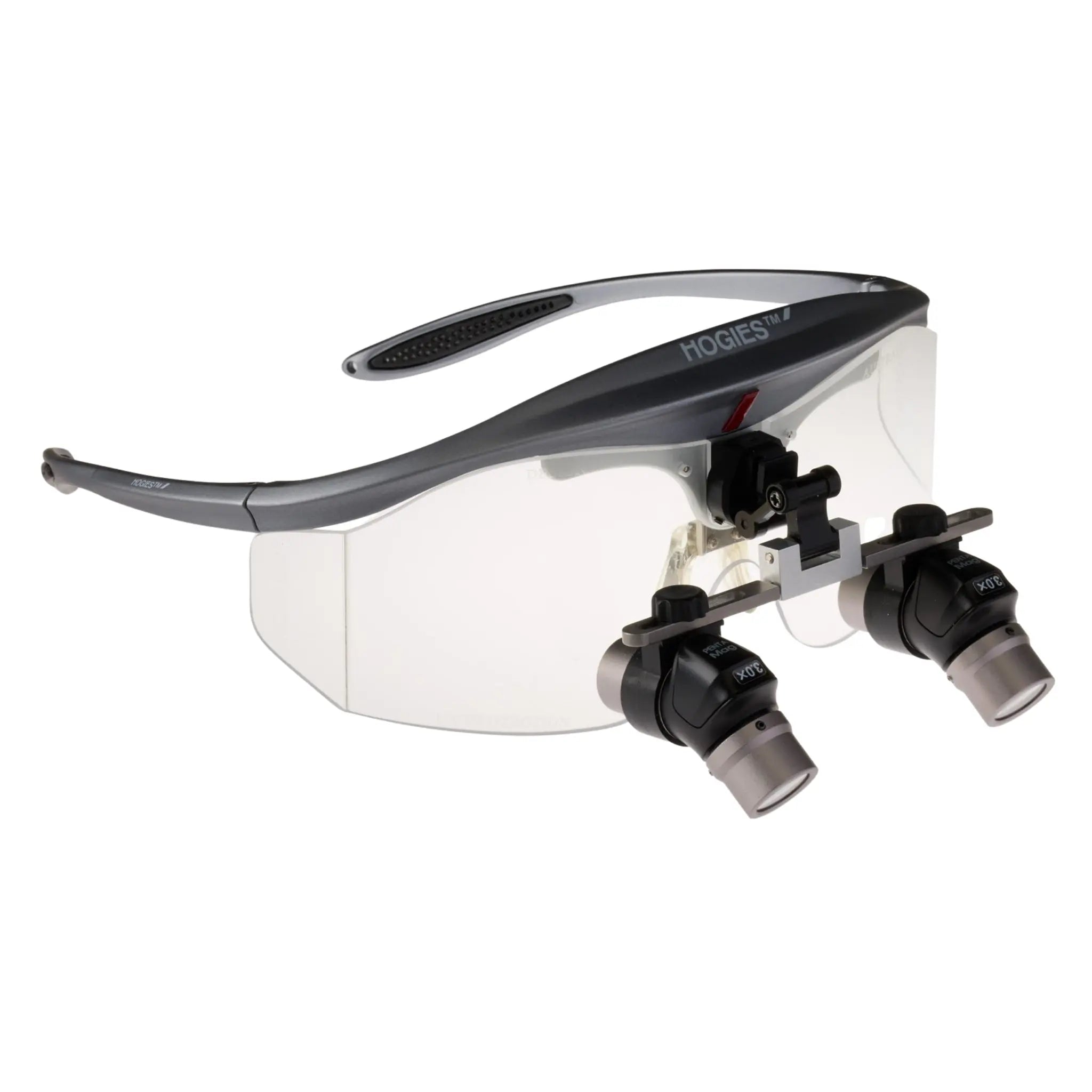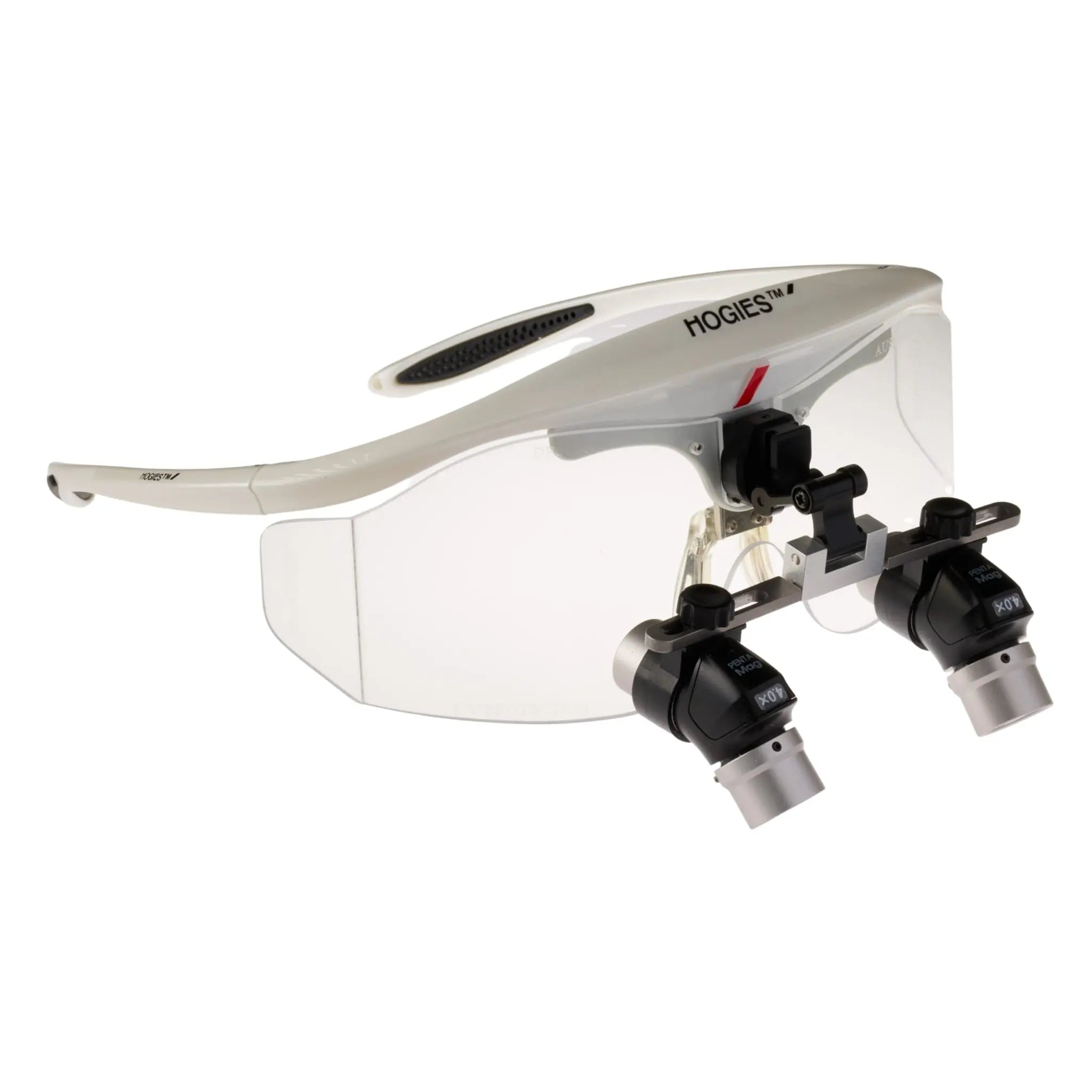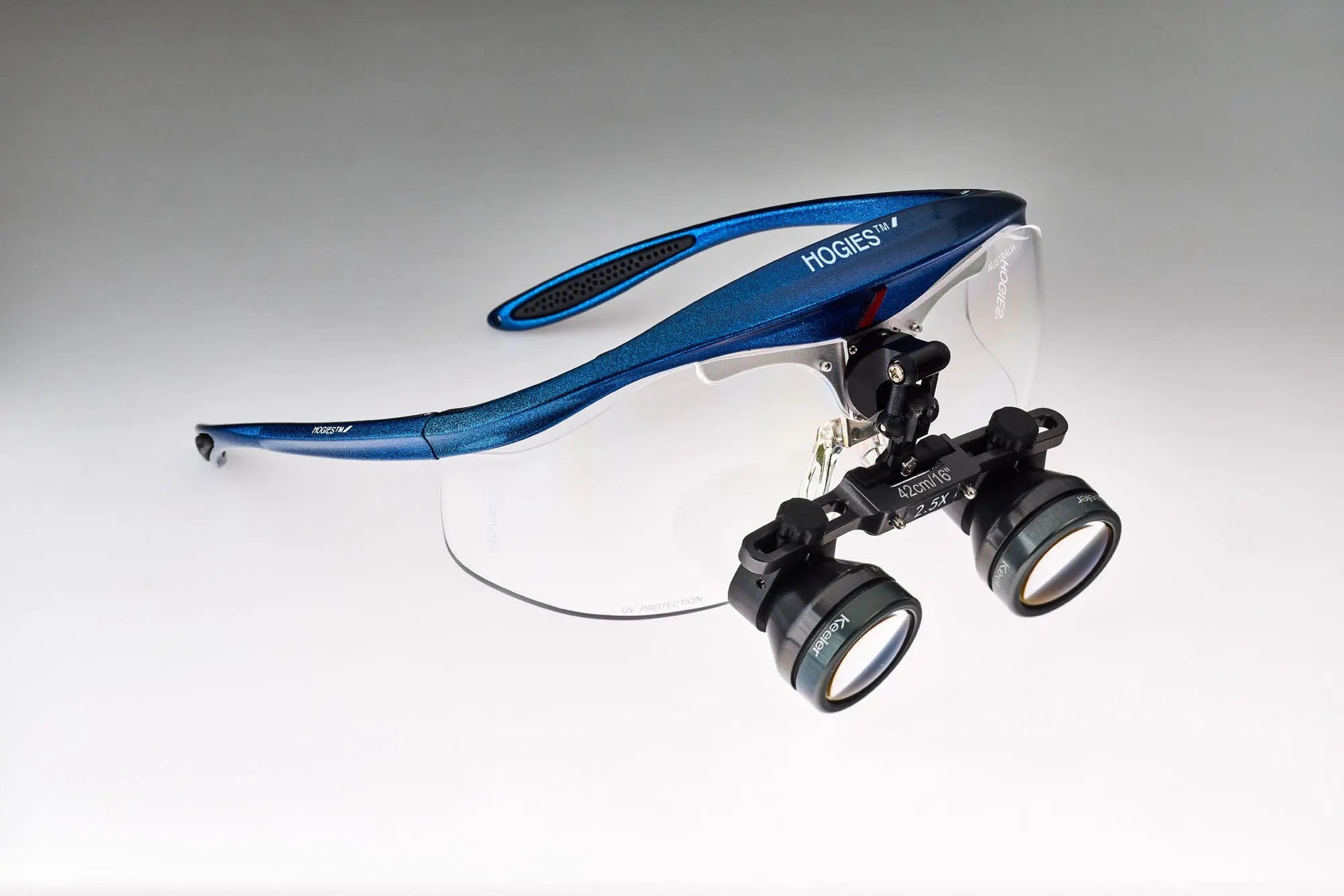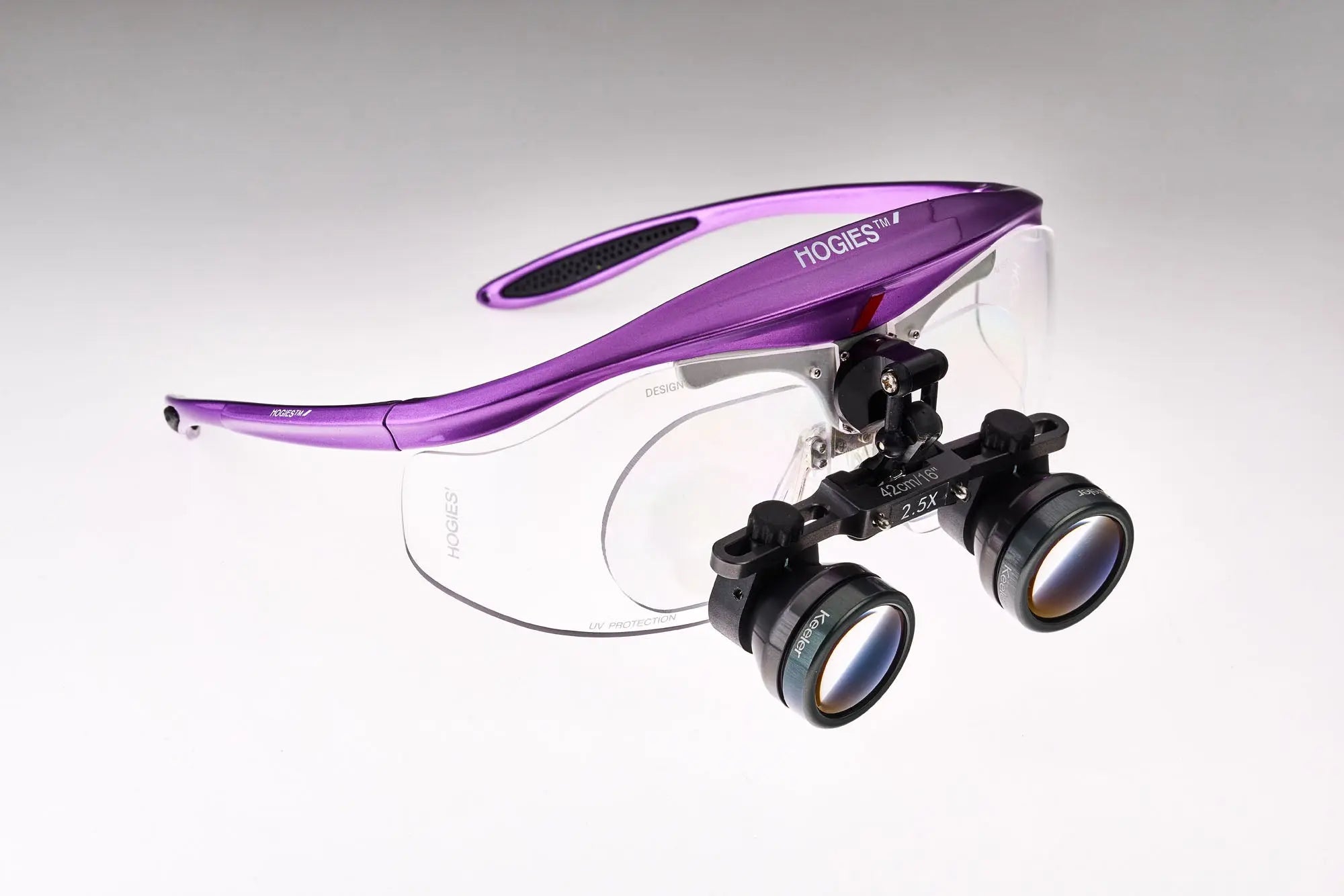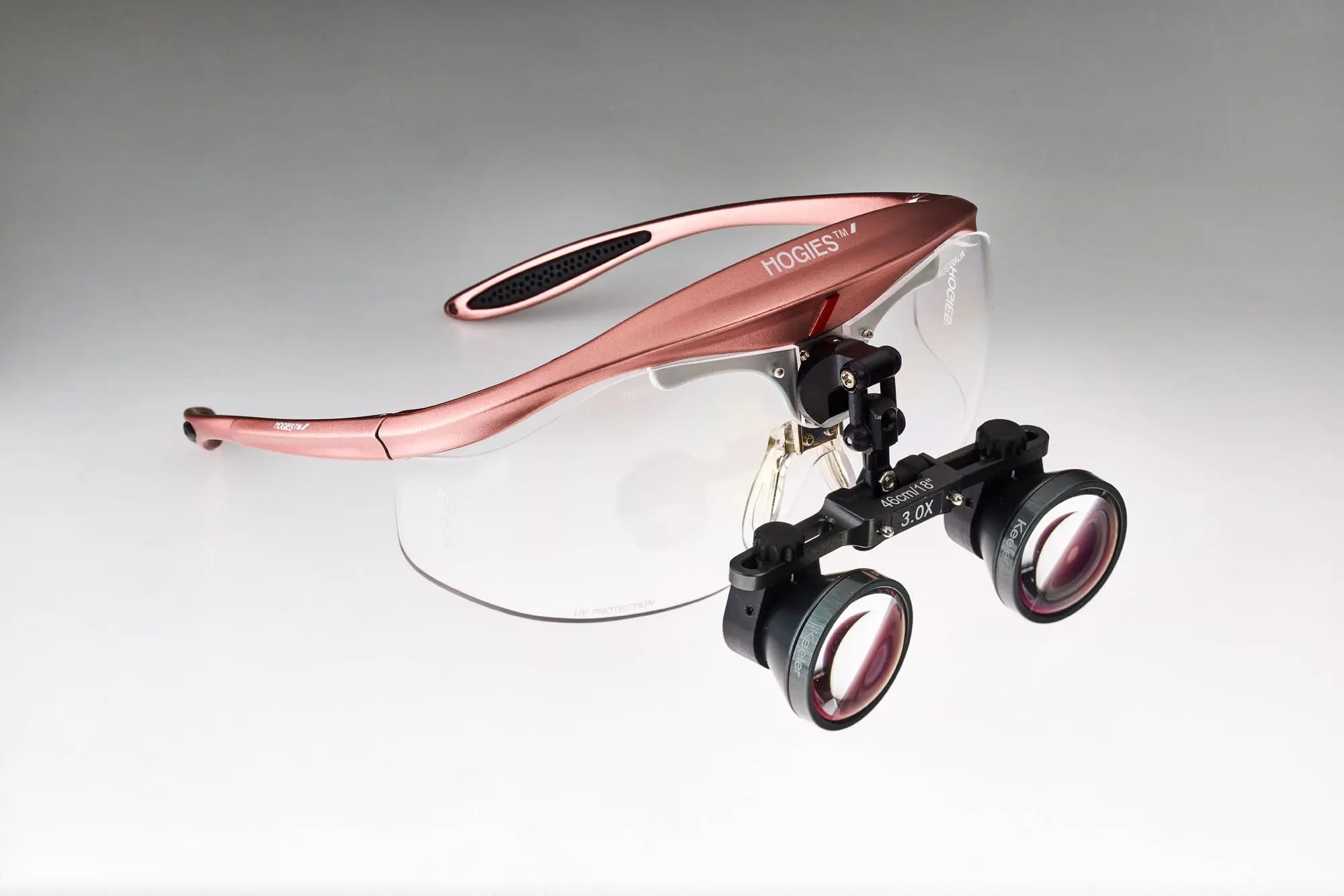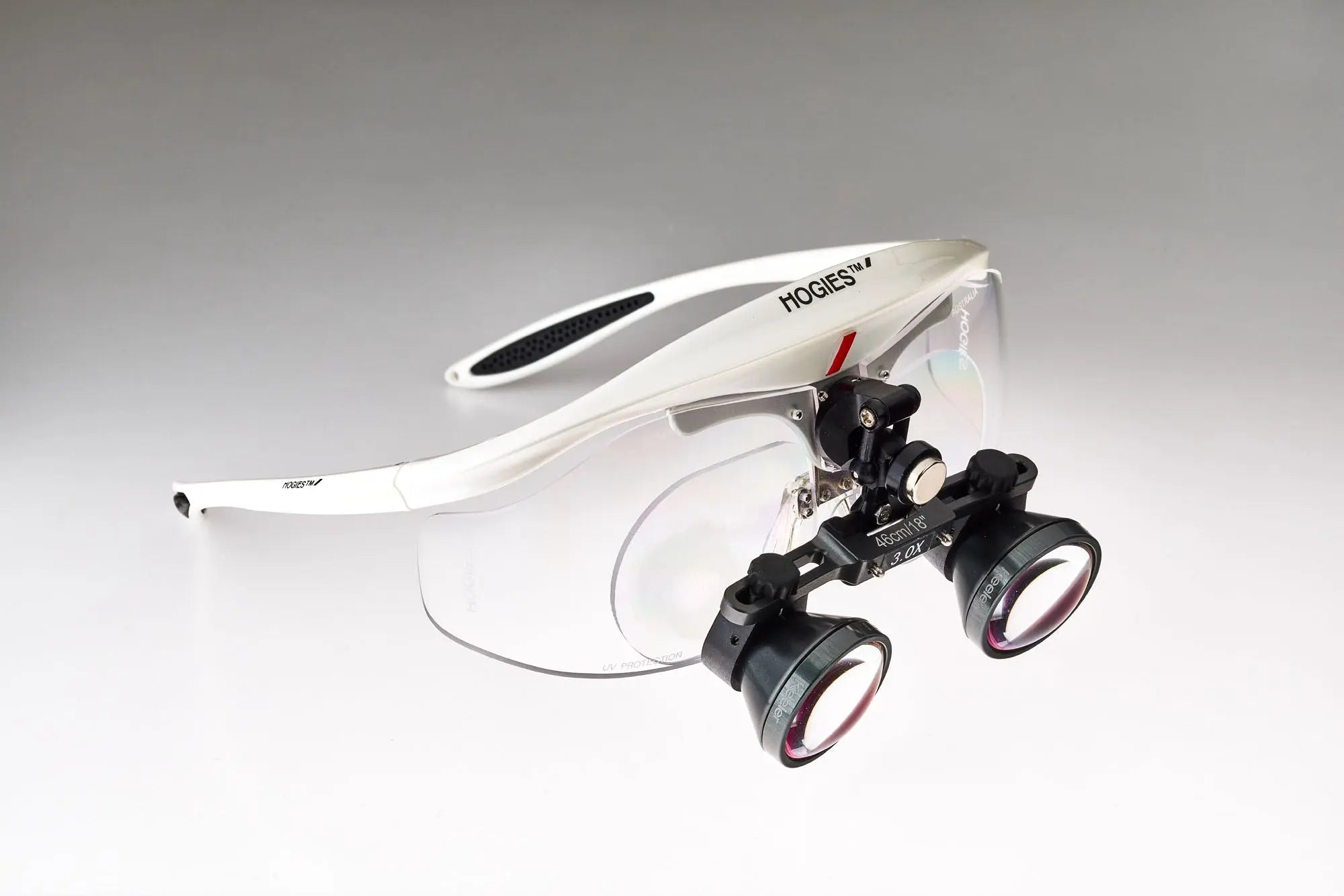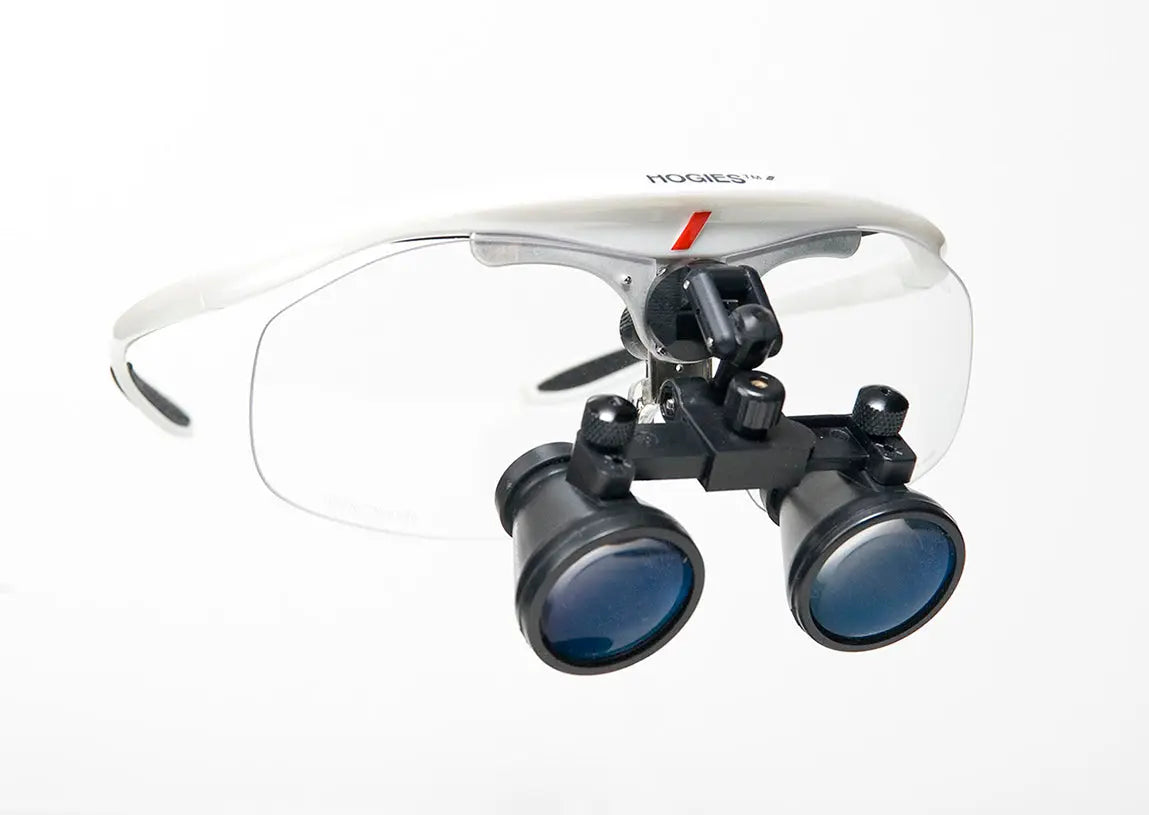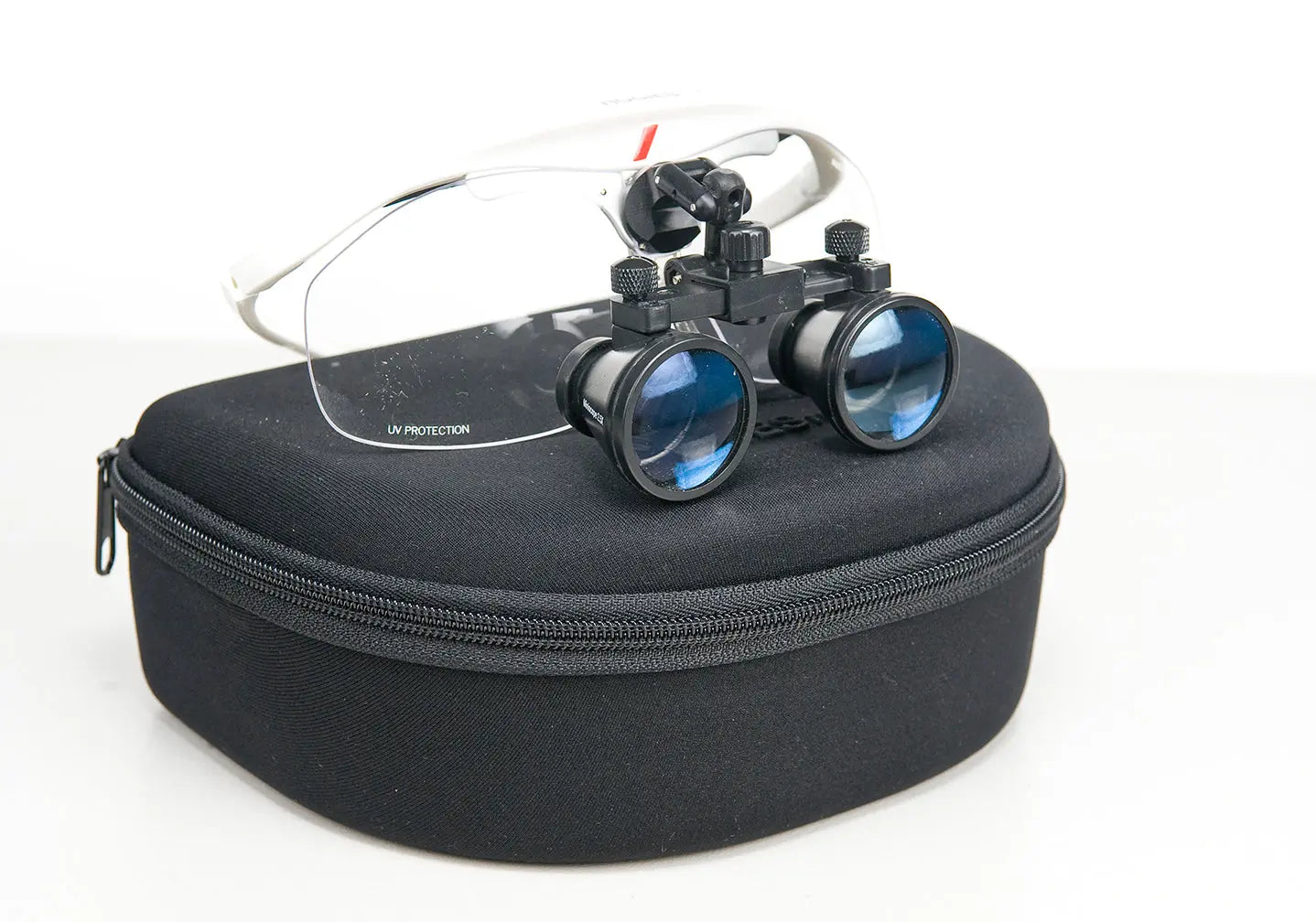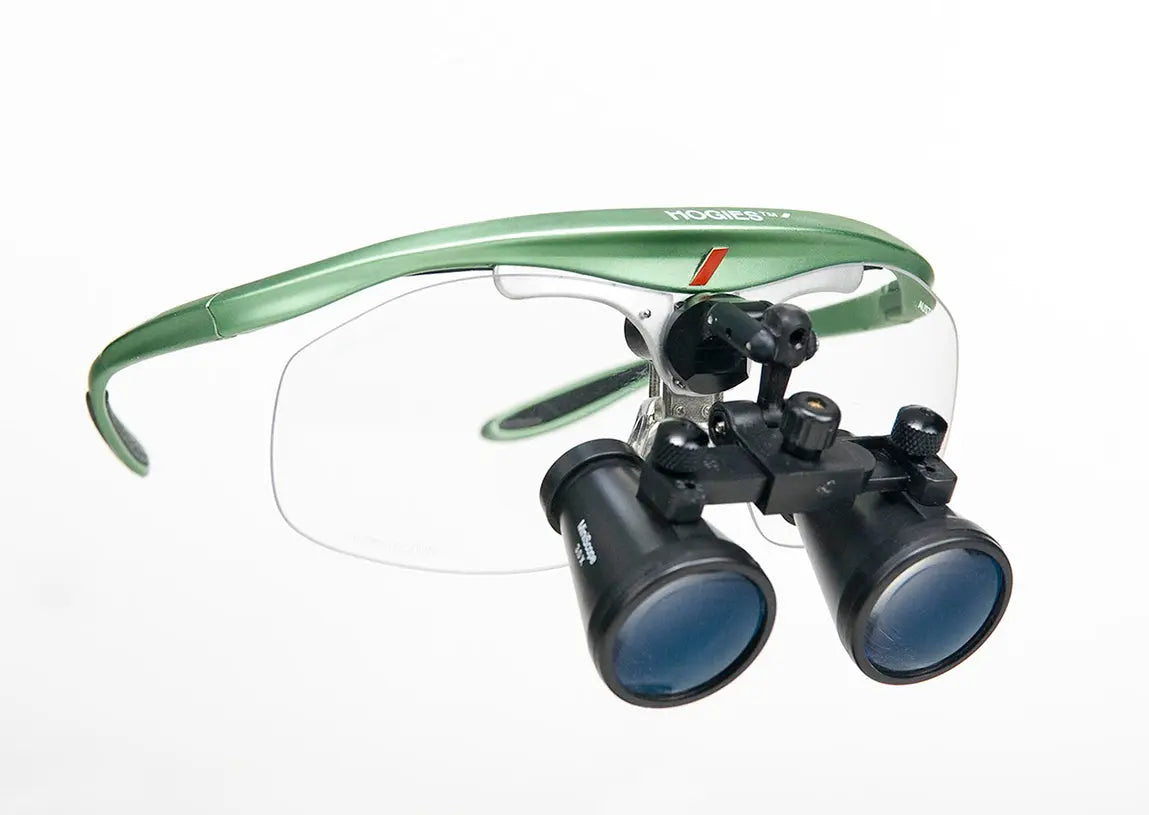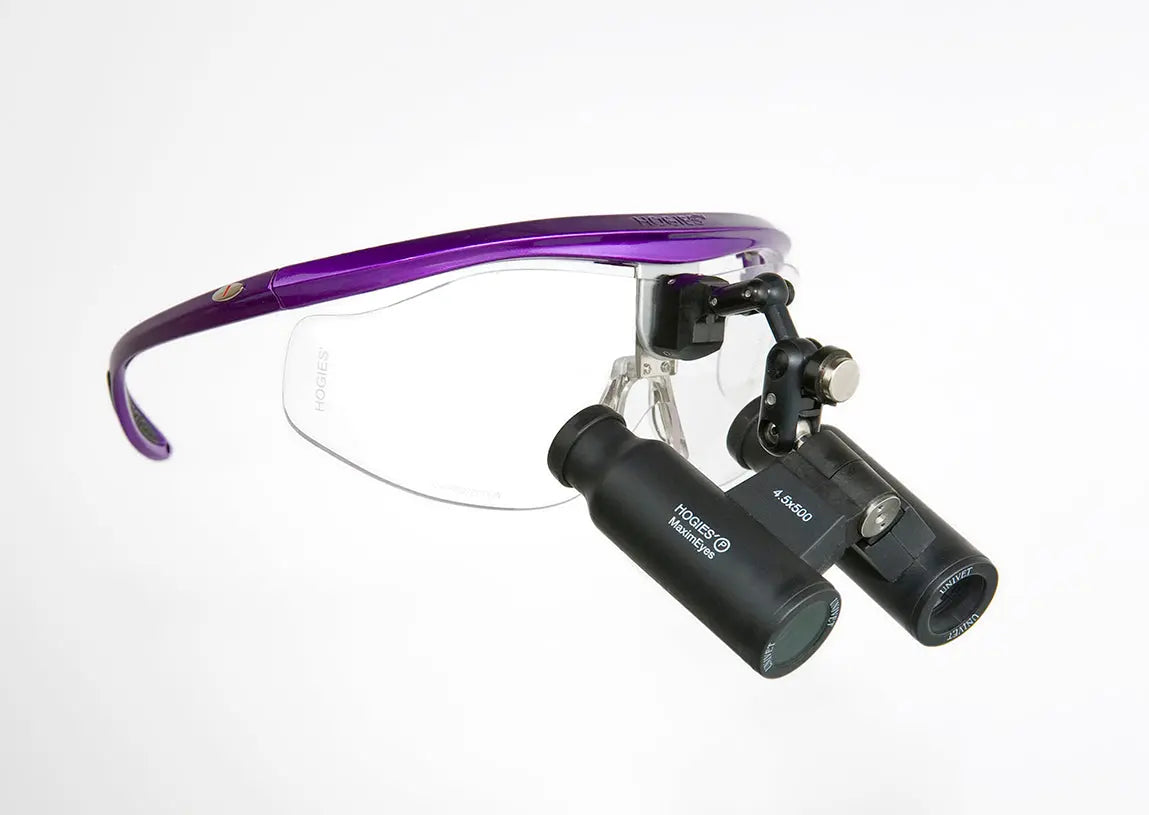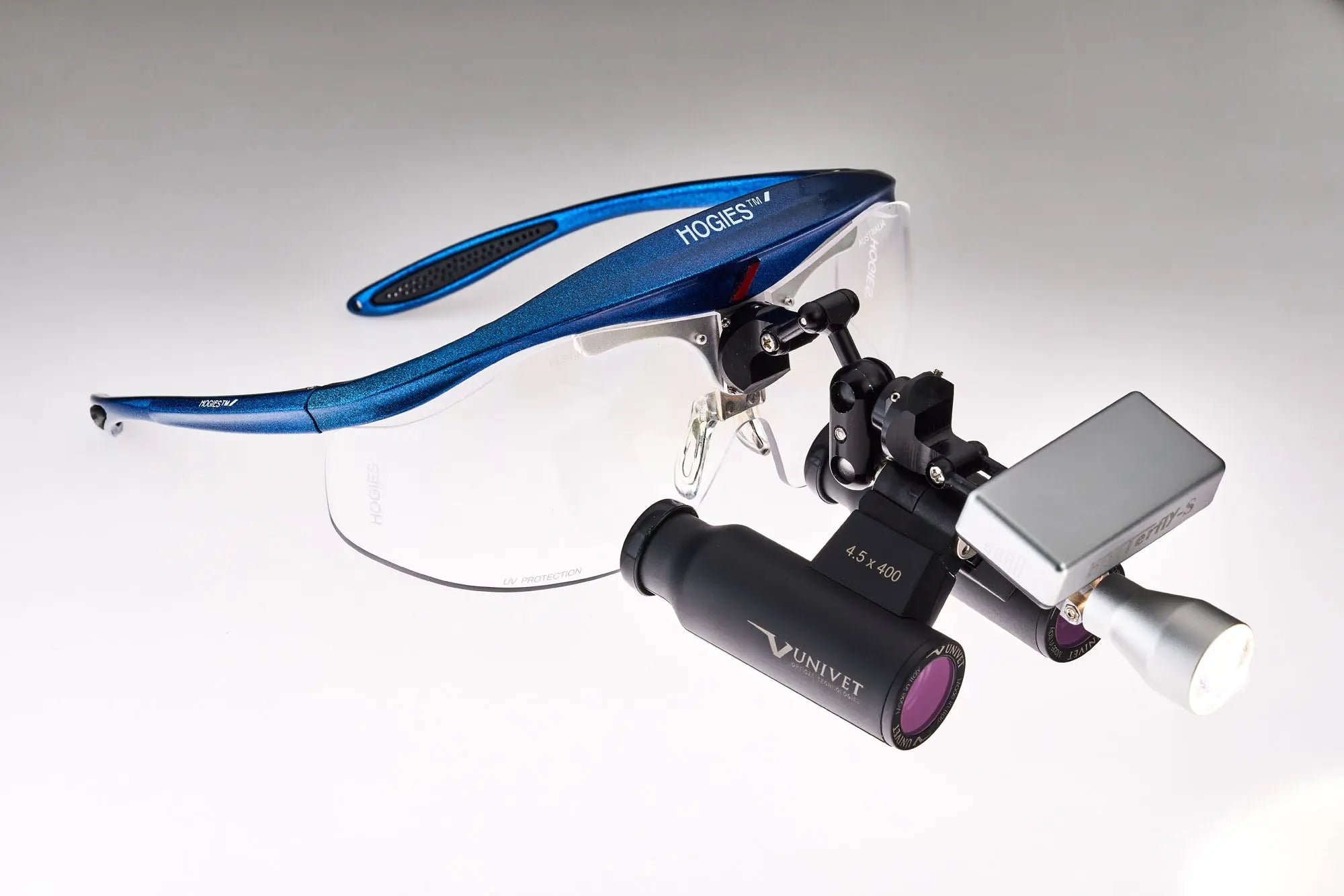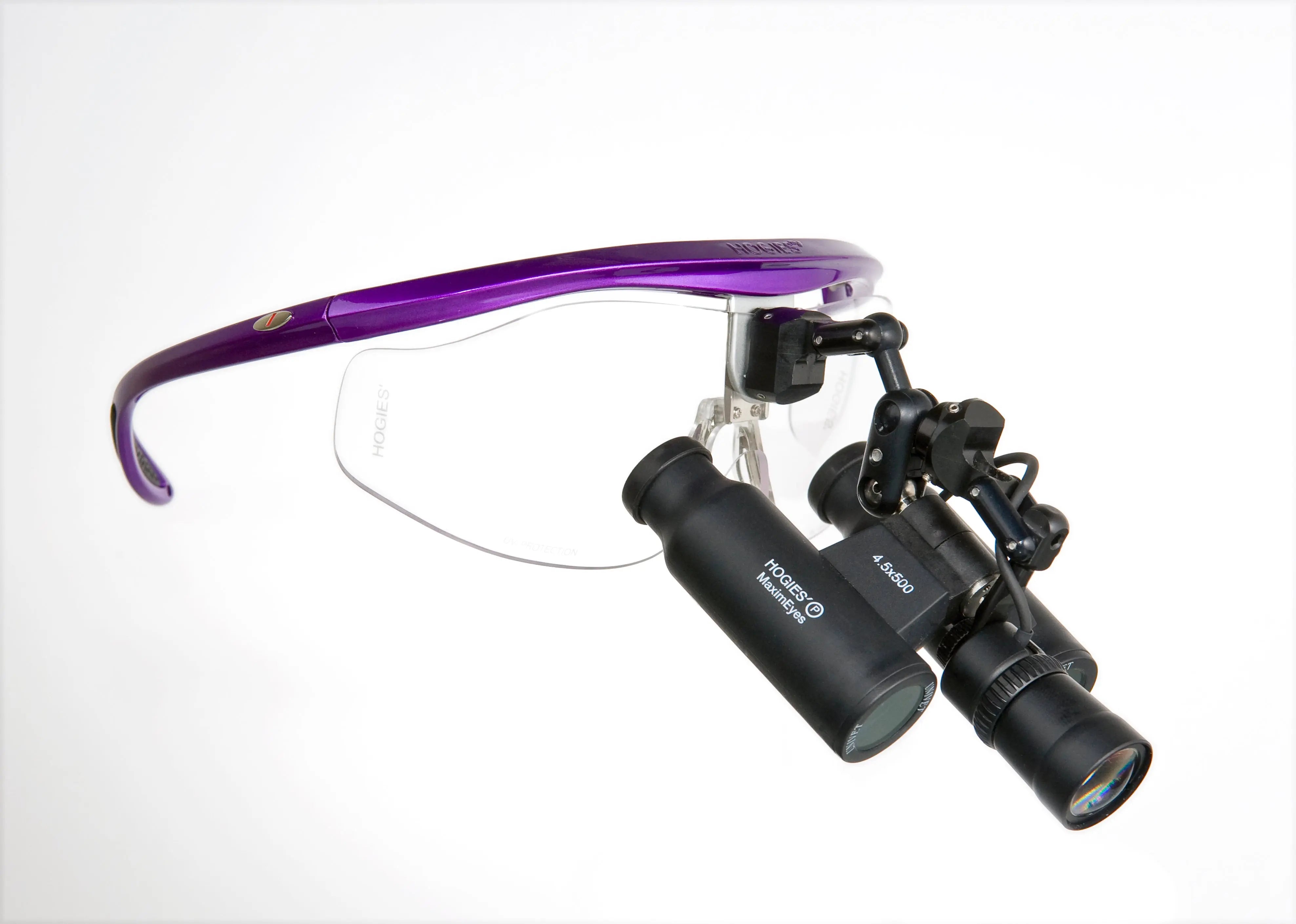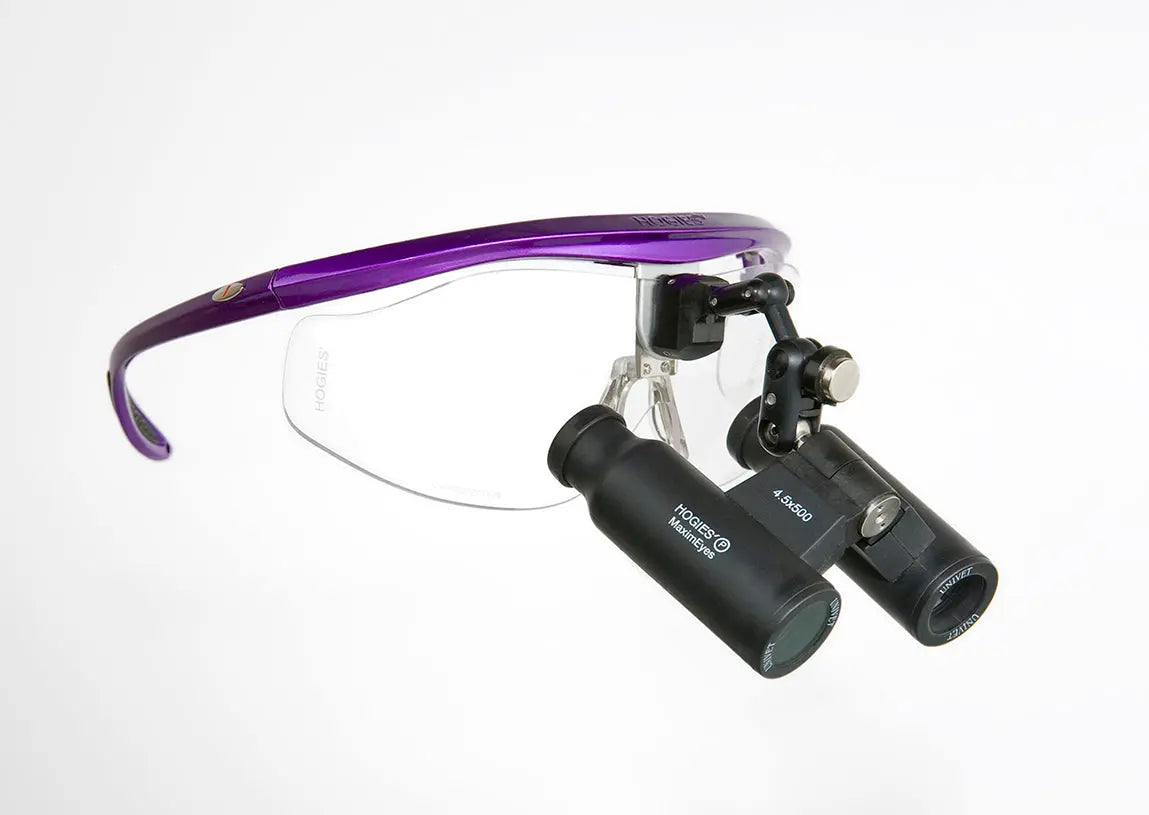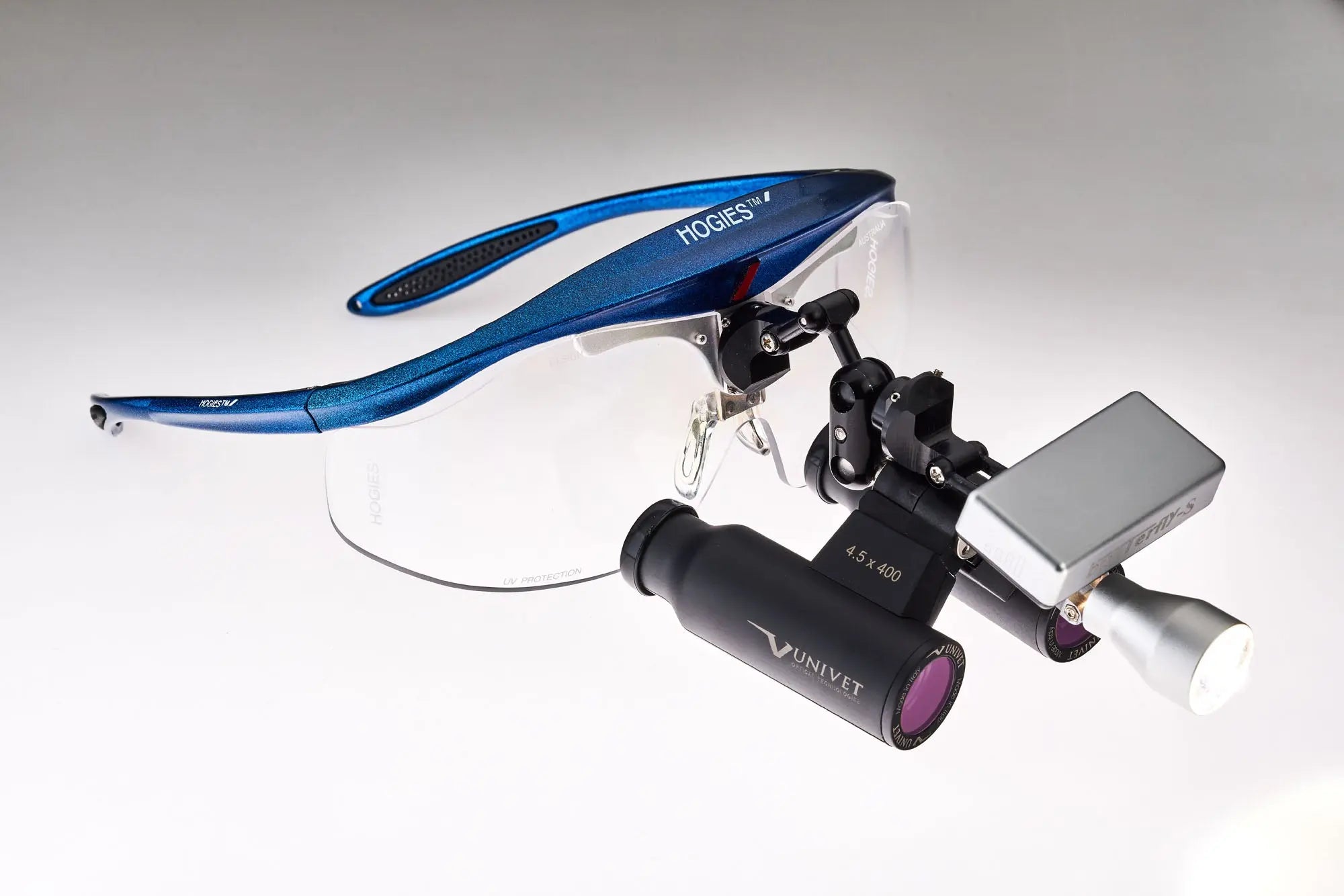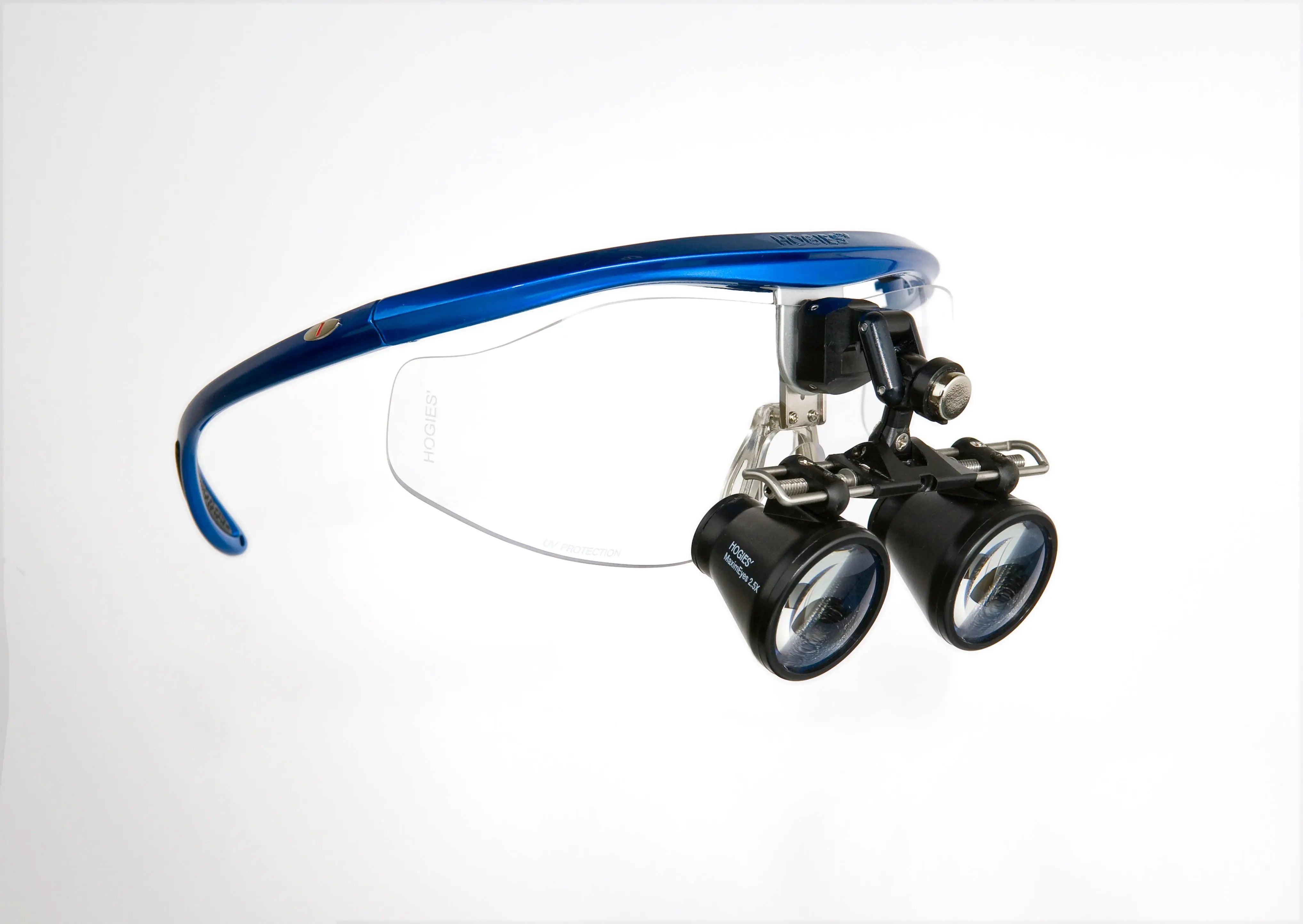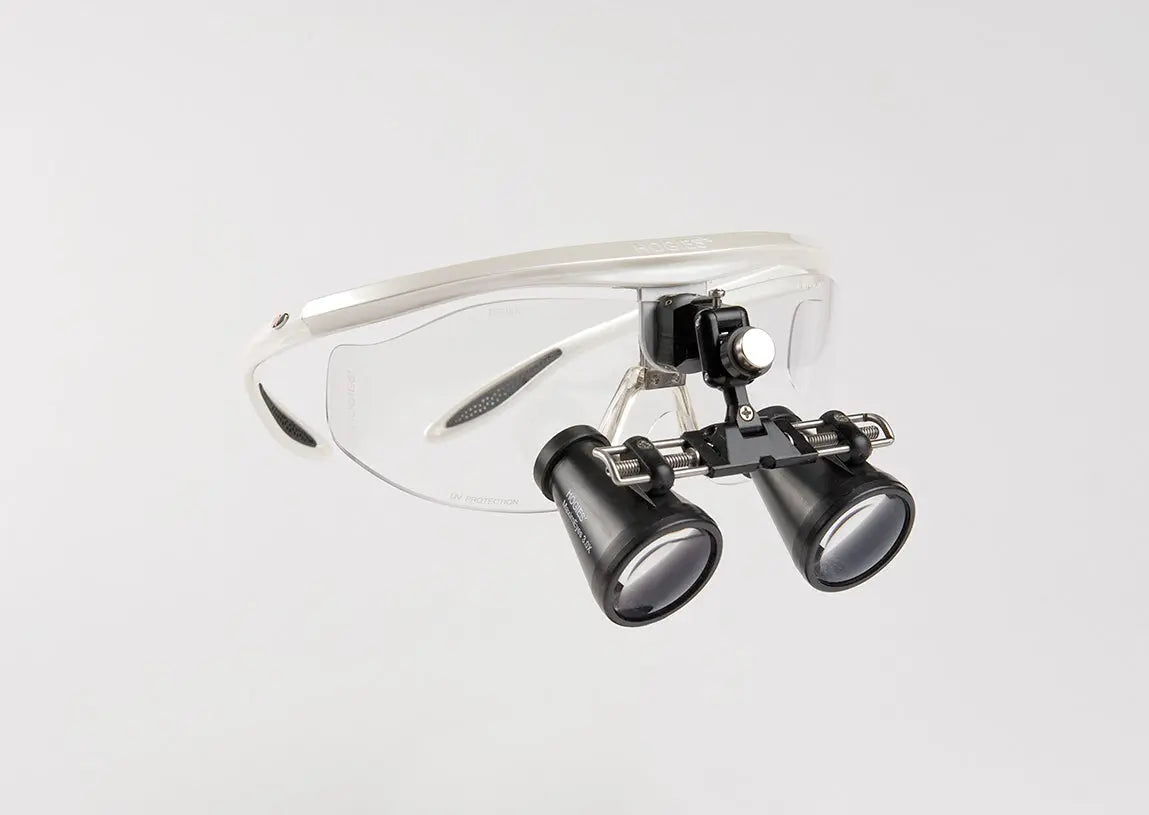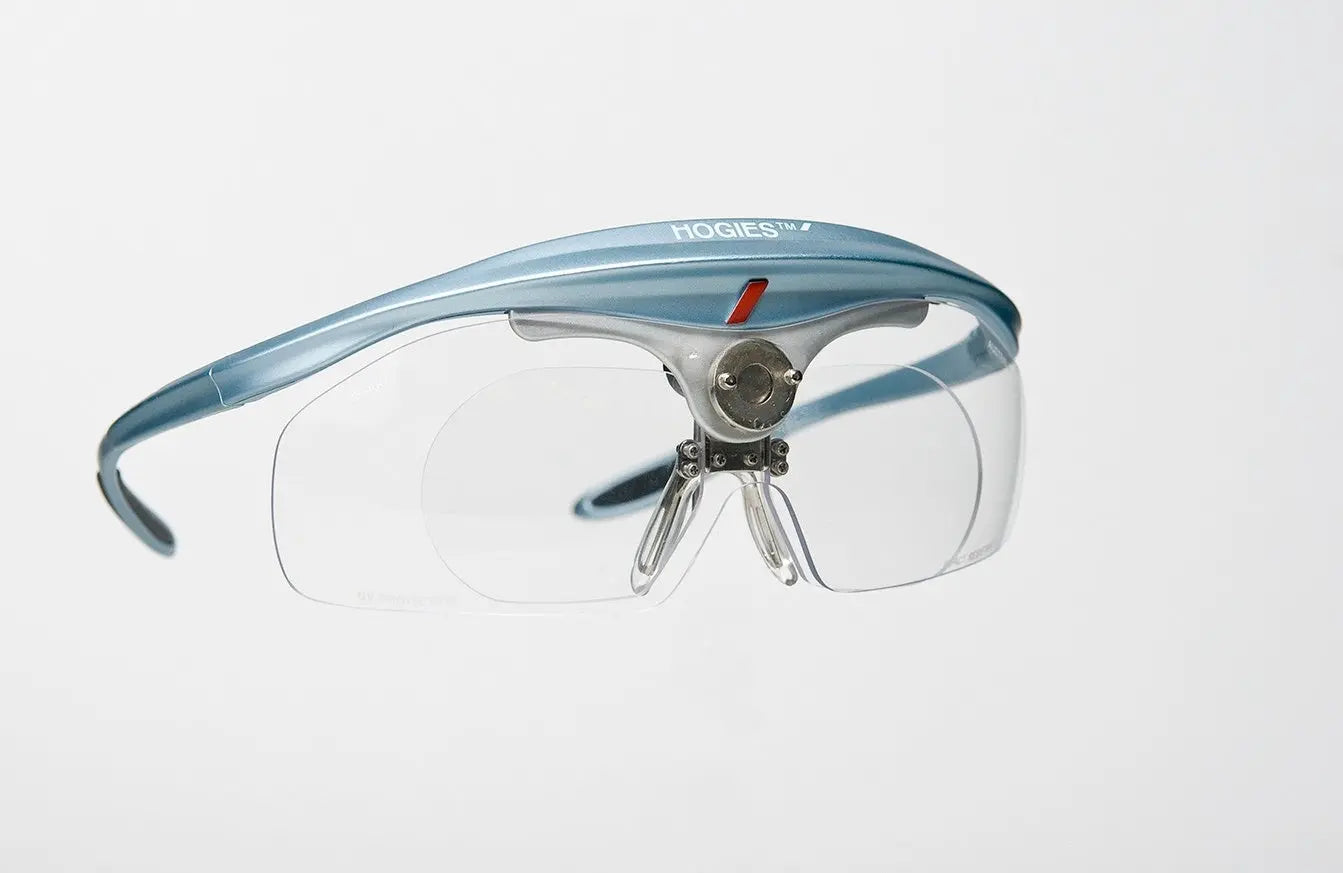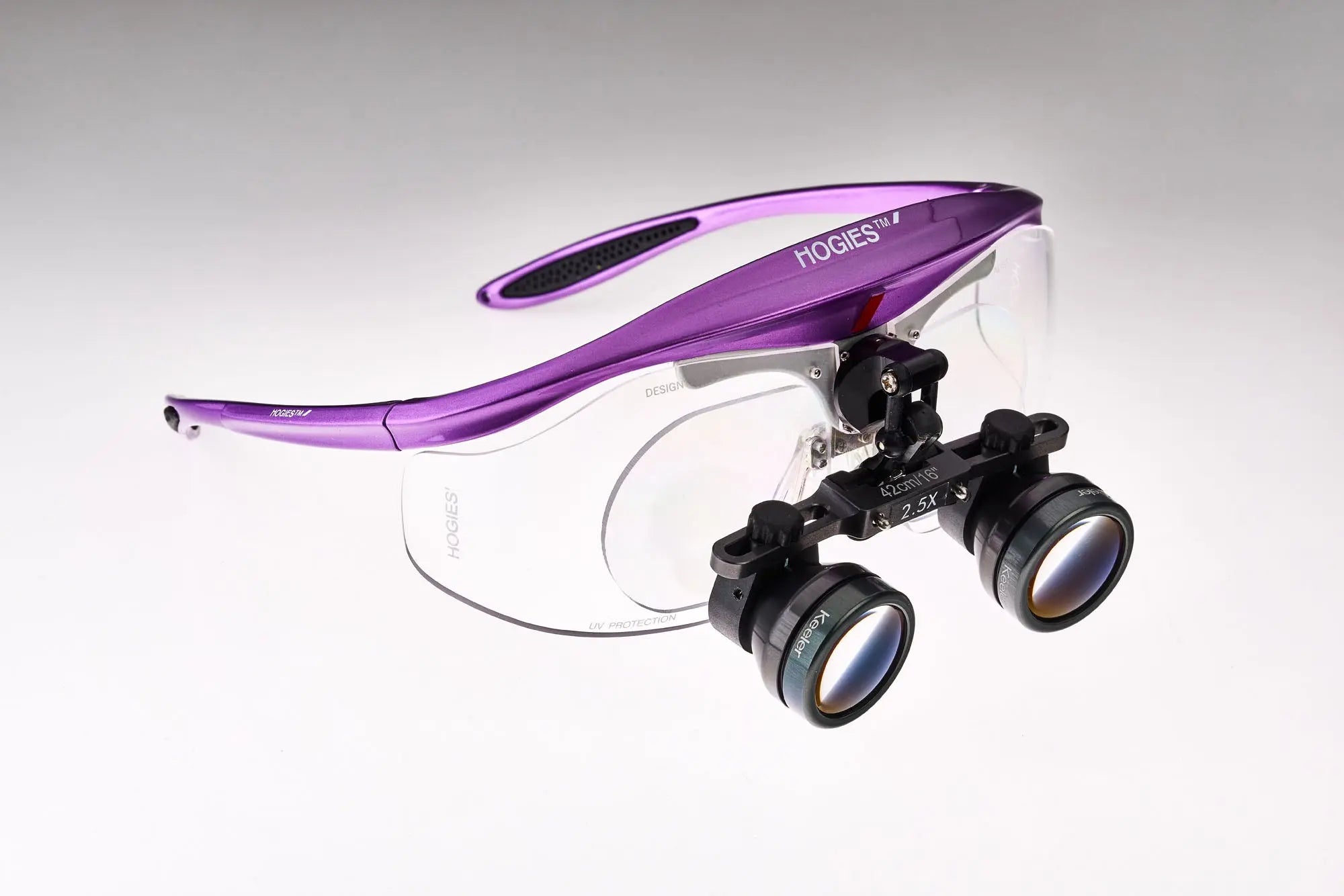

Choosing dental loupes or surgical loupes comes down to four decisions: the magnification your work actually needs, a working distance measured to how you actually work, whether you need a light and what happens when your prescription changes. How much each one matters depends on how you work. Chairside, a pair is on for hours at a time, most days, so how it sits at the end of your work day counts for more than how it feels in the first five minutes. Through a theatre list the optics come on and off, and what matters is that the pair keeps adapting, case to case and across a career. Hogies only sells flip-up loupes, because we believe flip-up is the most versatile design, and every system here is built onto the same MediView frame.
What magnification do you actually need?
Most general dental, hygiene and assisting work is covered comfortably at 2.5x to 3.0x. The field of view is wide, small head movements are forgiven and it is the easiest range to adapt to if this is your first pair. Restorative, endodontic and surgical work, where fine detail matters more than field width, generally moves practitioners up through 3.5x to 6.0x.
Higher magnification is not automatically better, and the reason is physical rather than optical. A narrow high-power field has you repositioning your head to keep the target in view, over and over, for as long as you are working. A wider field at a lower power often gets more done and asks less of your neck while it does it. Choose the lowest magnification that lets you see what you need to see clearly.
If you choose one and find in practice that it was not the right call, tell us and we change it. That is not a returns process, it is just what we do.
Across the range that means Galilean systems at 2.5x and 3.0x in the MiniScope and Keeler lines, prismatic systems from 3.5x through 6.0x where the detail work starts and the ErgoPath deflection system from 3.0x to 7.2x.
Will you be wearing these all day?
A dental day is different from a theatre list. Chairside work runs for hours at a stretch, most days of the week, so every fit decision compounds in a way it does not for someone who puts loupes on for a case and takes them off again. This is the part worth slowing down on.
Declination angle carries most of it. That is the downward tilt of the optics, and it sets how far you drop your head to see the field. It stays adjustable after purchase, so you can keep bringing your head up as you settle into a pair rather than being stuck with whatever angle you started on.
Weight is the other half, and the honest answer is that a flip-up pair is heavier on the scales than a bonded one. The support cord carries almost all of it, which is why there is almost no pressure on the nose bridge and no red marks. The optics also lift clear between patients, so your eyes are not looking through magnification for every minute of the day.
If you want more deflection than a standard flip-up geometry gives you, the ErgoPath system is designed around exactly that, in Melbourne, from 3.0x to 7.2x.
What changes for surgical work?
A theatre list has a different rhythm. The optics go on for a case and come off between, so the hours are lower and broken up, and the fit decisions that compound over a full clinical day do not compound the same way.
What matters more is that the pair keeps adapting. Declination angle still counts across a career, just less than it does chairside. The optics flip up mid-case without breaking scrub, so you can drop to unmagnified vision and eye contact with the room, then bring the magnification back.
Because the optics are not bonded into a prescription lens, a pair can be refitted rather than replaced, whether that is to your own changed script or to a different surgeon.
How is working distance set?
Working distance is the gap between your eyes and the tooth or the field when you are in the position you actually work in, seated or standing. It is measured for you and set at the point of purchase, so it is worth being measured in the posture you actually hold, not the one you straighten into for the tape. A pair measured to a posture you do not hold is a pair you will lean into every time you wear it.
If you get it home and it does not suit you, we change it. No fuss and no fee. The same goes for magnification: if the power you chose turns out not to be the one you needed, we change that too. You are not locked into a decision you had to make before you had ever worked in the pair.
Two things you can change afterwards. Interpupillary distance is wearer-adjustable across the range, so the barrels can be brought in or out to suit your eyes. Declination angle is also adjustable after purchase, which is what lets you bring your head up without losing the field.
Do you need a light?
If you work in a cavity, under a rubber dam, deep in a surgical field or anywhere the overhead light throws a shadow, a loupe light does more for what you can see than another half-step of magnification will. It mounts magnetically to the same frame, so it comes on and off without tools.
A light does add weight, and it sits on the same platform, which means the same support cord carries it. If you are only wearing loupes for part of the day, the magnetic mount also means the light comes off in a second rather than living on the frame permanently.
What drives the price of dental loupes?
Three things, in roughly this order.
- The optical system. Galilean loupes use a simpler two-lens design and sit at the accessible end. Prismatic loupes add roof prisms that fold the light path, which is what delivers the longer working distance and the flatter, wider field at higher magnifications, and it is the main reason they cost more.
- The magnification. Higher powers need more glass, tighter tolerances and better coatings.
- The frame and what mounts to it. Every Hogies loupe is fitted to the MediView frame. It carries the optics, the light, the prescription carrier and the protective shield, and it is what the support cord loads against.
What is worth understanding before comparing figures is that a flip-up system splits the cost between the optics and the frame. Because the optics lift off, the frame is a platform you keep. Current pricing for each system sits on its own product page.
What happens when your prescription changes?
Your prescription will change. With a through the lens system, the optics are bonded into a carrier lens that was ground to your script, so a change means the loupes go back to the manufacturer, and you work without them while they are away.
With a flip-up system the optics are not in your prescription lens. The prescription sits in the frame, the magnification sits in the barrels and updating one does not touch the other. Every Hogies loupe is fitted to the MediView frame, which takes a magnetic prescription carrier, so a new script means a new lens rather than a new loupe system.
Honest concession, because it is the one row where through the lens wins: a flip-up pair is heavier on the scales. What those grams buy you is a pair where nothing is permanent, carried by a cord rather than by your nose.
Frequently asked questions
Are flip-up loupes comfortable to wear all day?
The support cord carries almost all of the weight, so there is almost no pressure on the nose bridge and no red marks. Declination angle stays adjustable after purchase, and the optics lift clear between patients rather than sitting in front of your eyes all day.
What magnification is best for dental hygiene work?
2.5x to 3.0x covers hygiene and general dental work well, because the wider field lets you move around the mouth without constantly repositioning your head.
Can I use loupes if I wear prescription glasses?
Yes. The MediView frame takes a magnetic prescription carrier, so your correction sits in the frame and the magnification sits in the flip-up barrels, independently of each other.
What if the working distance or magnification turns out to be wrong for me?
We change it. Working distance is measured and set for you at the point of purchase, and if it does not suit you once you are working in the pair, we reset it. The same applies to magnification. There is no fee and no fuss. Interpupillary distance and declination angle you can adjust yourself at any time.
What is the difference between Galilean and prismatic loupes?
Galilean loupes use a two-lens design and are lighter and more accessible, typically at 2.5x to 3.0x. Prismatic loupes use roof prisms to fold the light path, which gives a flatter, wider field and a longer working distance at higher magnifications from 3.5x upward.
Are these suitable for surgical use?
Yes. The same systems are worn chairside and in theatre. For surgical work the optics flip up mid-case without breaking scrub, and because they are not bonded into a prescription lens a pair can be refitted to a new script, or to a different surgeon, rather than replaced.
Are these suitable for dental students?
Yes. Students often start at 2.5x or 3.0x, and because the optics flip up and the frame takes a prescription carrier, the same platform carries through from training into practice.
Every Hogies loupe system carries a 24 month warranty, ships free worldwide and is designed and dispatched from Australia. The MediView frame and the loupe systems built on it are 2003 Australian Good Design Award Winners.