
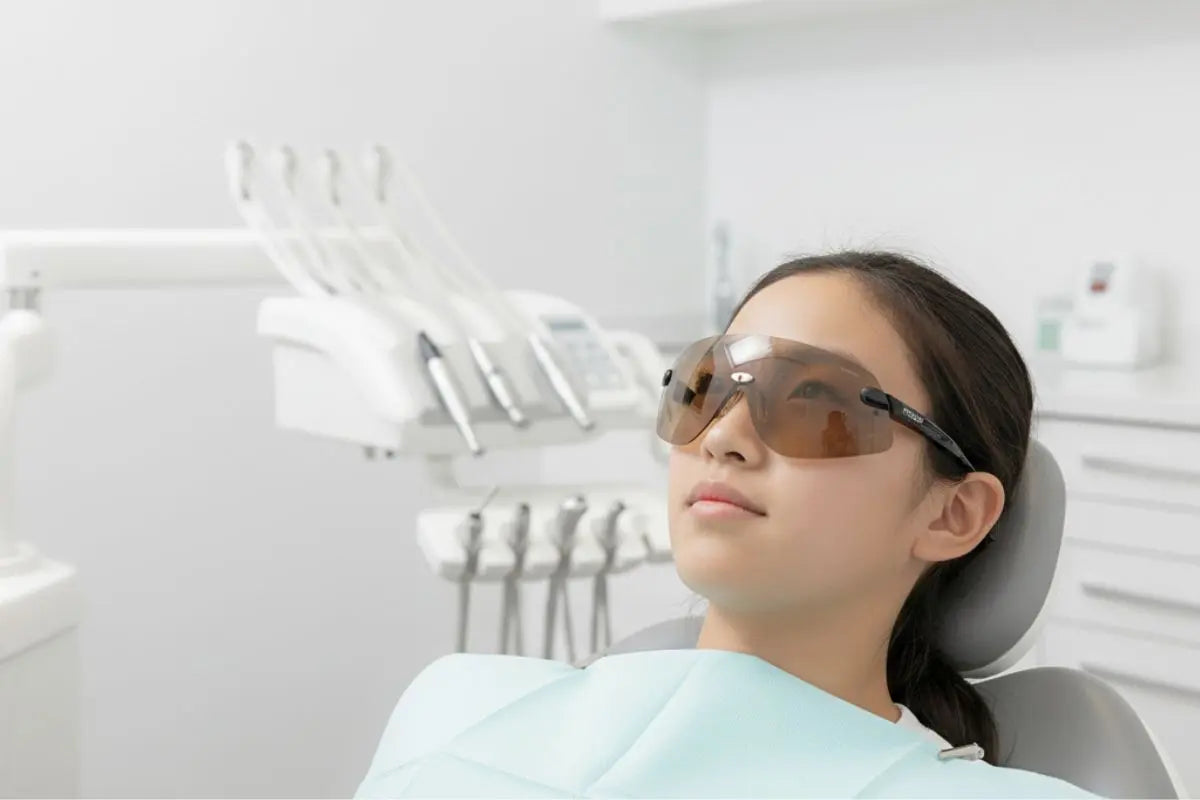
In dental and specialist clinical environments, patient eye protection is mandatory.
High-speed instruments, splatter, debris, and curing lights all create risk. Patient eyewear must first and foremost provide certified protection.
Comfort and stability matter. But protection comes first.
Choosing the right patient protection glasses requires evaluating safety standards, stability in reclined positions, and long-term durability in clinical environments.
1. Certified Safety Protection Comes First
Patient glasses are safety equipment.
They must meet recognised safety standards.
In Australia and New Zealand, look for AS/NZS 1337.1 compliance.
In Europe, EN 166 Optical Class 1 certification applies.
Certification confirms:
• Tested impact resistance
• Verified optical performance
• Structural integrity under stress
If eyewear is not certified, it is not appropriate for clinical use.
Explore Hogies Safety Eyewear for certified protection designed for dental and specialist environments.
For a broader breakdown of certification standards and how to evaluate professional safety eyewear, read our complete guide to choosing safety glasses.
2. Stability When Patients Are Reclined
Once protection is confirmed, stability becomes critical.
Dental and specialist patients are typically:
• Fully reclined
• Semi-reclined
• Frequently repositioned
Standard safety glasses designed for upright wear can shift when temple arms press into the headrest.
This may:
• Push frames forward
• Reduce eye coverage
• Create gaps at the brow
• Compromise protection
Patient protection glasses must remain stable in reclined positions without relying on excessive clamping pressure.
If the frame moves, protection is reduced.
3. Fit and Coverage Across Different Face Profiles
Patients vary in facial width, bridge height, and head shape.
A single rigid frame rarely provides consistent coverage.
Proper patient eyewear should offer:
• Balanced bridge geometry
• Adequate lens width
• Stable temple design
• Coverage that remains consistent during movement
Correct fit ensures protection stays in position throughout the procedure.
4. Durability and Hygiene in Clinical Practice
Dental and specialist clinics require frequent disinfection between patients.
Patient eyewear must:
• Withstand approved cleaning agents
• Maintain coating integrity
• Resist surface degradation
• Retain optical clarity over time
Scratched or cloudy lenses reduce visibility and professional presentation.
Durability directly supports safety performance.
5. Optical Clarity for Patient Comfort
Even though patients are not performing clinical tasks, optical distortion can cause discomfort when reclined and looking upward.
Look for:
• Optical Class 1 clarity
• One-piece polycarbonate lenses
• Hard-coated surfaces
Distortion-free optics reduce unnecessary discomfort during treatment.
6. Glare Reduction as a Secondary Consideration
Overhead lighting in dental and specialist settings can be intense.
Tinted lenses may reduce light sensitivity for some patients, particularly during longer procedures.
However, glare reduction should never replace:
• Certified protection
• Stable fit
• Proper coverage
Comfort features support safety. They do not define it.
Common Mistakes When Selecting Patient Protection Glasses
Choosing non-certified frames
Using upright clinician eyewear for reclined patients
Ignoring stability against headrests
Assuming one size fits all
Selecting based on price alone
Patient protection glasses should:
Provide certified protection.
Remain stable when reclined.
Maintain consistent coverage.
Frequently Asked Questions
Are patient protection glasses required in dental and specialist clinics?
In many jurisdictions, yes. Patients must wear certified protective eyewear during procedures involving debris, splatter, or curing lights.
Why is certification important for patient eyewear?
Certification confirms tested impact resistance and optical clarity appropriate for clinical environments.
Why do glasses shift when patients recline?
Standard temple arms can press into headrests, pushing frames forward and reducing stability and coverage.
How often should patient protection glasses be replaced?
Replace eyewear if lenses are scratched, distorted, or if frame stability is compromised.
Explore certified patient protection solutions within Hogies Safety Eyewear and choose eyewear engineered for protection, stability, and clinical performance.
Share:
Can You Wear Safety Glasses with Prescription Lenses? What Actually Works
What Are Safety Glasses and Why Are They Needed?