
Choosing the right safety glasses is not about price or appearance.
It is about certified protection, optical precision, and long-term performance.
Poorly designed safety glasses fog, distort vision, create pressure points, and get removed mid-task. When eyewear is removed, protection fails.
This complete 2026 guide explains how to evaluate safety glasses properly using certification standards, optical ratings, fit geometry, prescription compatibility, and real-world performance criteria.
1. Verify Safety Certification First
Before comfort. Before style. Before cost.
Check compliance.
In Australia and New Zealand, safety glasses should meet AS/NZS 1337.1:2010.
In Europe, look for EN 166 Optical Class 1 certification.
Certification confirms:
• Tested impact resistance
• Verified optical clarity
• Structural integrity under load
If eyewear is not certified, it is not safety equipment.
For certified professional models, explore Hogies Safety Eyewear.
2. Understand Optical Class Ratings
Optical Class 1 lenses are rated for continuous professional wear.
Lower optical classes are not designed for extended shifts.
Poor optical quality leads to:
• Subtle distortion
• Eye fatigue
• Reduced concentration
• Headaches
Look for:
• Optical Class 1 rating
• One-piece spherical polycarbonate lens
• UV400 protection
• Hard-coated scratch resistance
• Hydrophobic surface treatment
Safety glasses must protect without degrading visual accuracy.
3. Fit Geometry Is a Performance Variable
Fit directly affects safety.
Incorrect fit causes:
• Slippage during movement
• Uneven pressure on the nose and temples
• Reduced lateral coverage
• Increased fogging
Evaluate:
• Frame width relative to face width
• Bridge profile compatibility
• Balanced temple tension
• Weight distribution
Frames that rely on clamping force create fatigue. Balanced geometry supports long-shift comfort.
If safety glasses are removed due to discomfort, they are not performing.
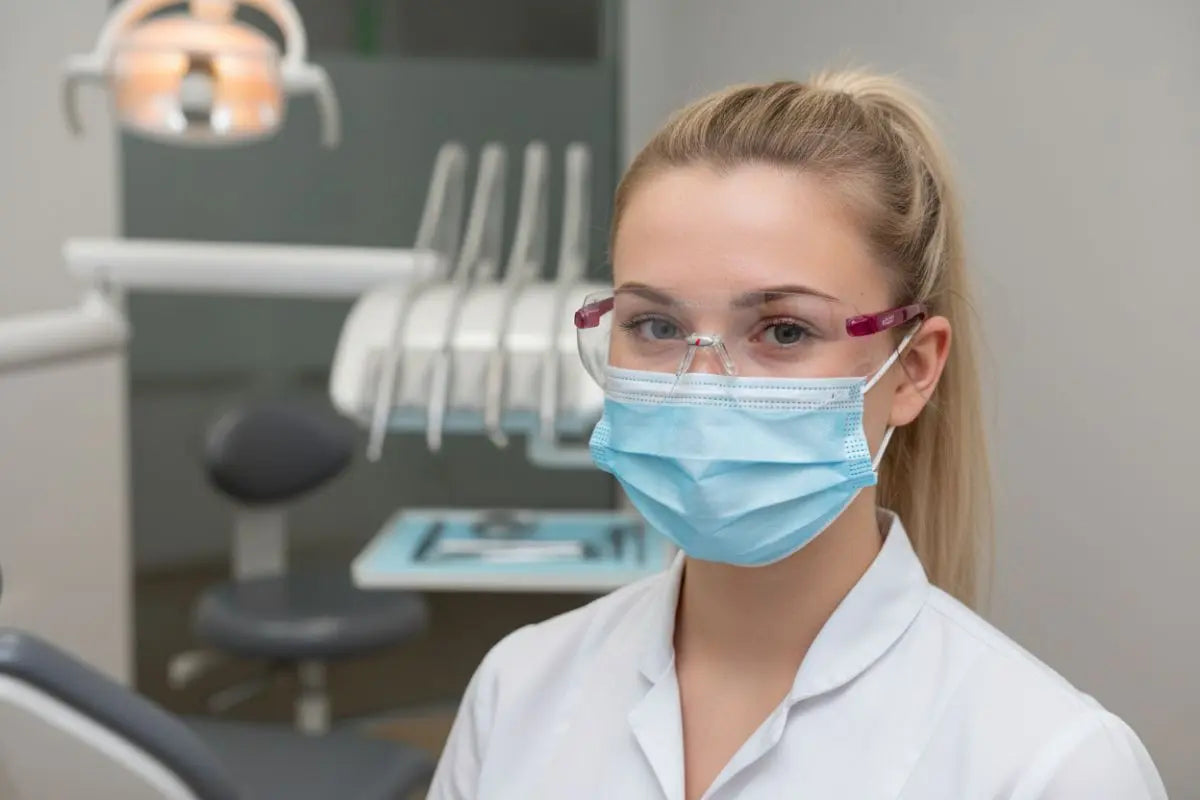
Different environments require different safety considerations. In dental and specialist settings, patient protection introduces additional stability and reclined-position requirements.
4. Anti-Fog Performance in Real Conditions
Fogging is a heat and airflow issue.
Contributing factors include:
• Physical exertion
• Temperature shifts
• Mask use
• Poor frame ventilation
Hydrophobic coatings help repel moisture. Lightweight frame design reduces heat retention.
Bulky frames trap warm air and increase fogging risk.
Fogging remains one of the primary reasons safety eyewear is removed.
5. Lateral and Peripheral Protection
Impact rarely occurs directly from the front.
Wraparound, single-lens designs improve peripheral containment and awareness.
Look for:
• Wide lens contour
• Consistent side coverage
• Optional side shields when required
Choose lateral protection based on work environment, not assumption.
6. Prescription Compatibility Without Compromise
Wearing safety glasses over prescription glasses creates:
• Double pressure points
• Increased fogging
• Reduced stability
• Optical layering distortion
Better solutions include:
• Fully integrated prescription safety lenses
• Removable insert systems designed for certified frames
The Hogies RX Prescription Insert is a rimless click-in insert compatible with EyeGuard Safety and EyeGuard Sports models. It provides prescription correction while maintaining certified outer-lens protection and stable fit.
Because it is removable, it offers flexibility across compatible frames without needing separate prescription safety glasses for each environment.
Prescription correction should integrate cleanly with safety standards.
7. Cheap vs Engineered Safety Glasses
Here is where most generic blogs stop. The difference becomes clear after extended wear.
| Cheap Safety Glasses | Engineered Safety Glasses |
|---|---|
| Basic impact compliance | Certified optical and impact standards |
| Fixed bridge profile | Size-specific fit systems |
| Thin coatings | Hard-coated, durable lenses |
| Heavy clamping tension | Balanced weight distribution |
| Limited prescription options | Integrated RX compatibility |
The longer the shift, the more noticeable the difference.
8. Common Mistakes When Buying Safety Glasses
Most purchasing errors come from these assumptions:
Choosing by price alone
Ignoring certification markings
Overlooking optical class rating
Assuming one size fits all
Wearing safety glasses over prescription frames long-term
Not considering fog management
Safety glasses should be selected as equipment, not accessories.
9. Maintenance Protects Performance
Safety glasses degrade over time.
Scratches reduce clarity.
Improper cleaning damages coatings.
Poor storage shortens lifespan.
Best practice:
• Store in a protective case
• Use a microfibre pouch
• Clean with alcohol-free lens cleaner
Maintenance protects optical performance and extends usability.
10. 2026 Safety Glasses Checklist
Before purchasing, confirm:
• Certified to AS/NZS 1337.1 or EN 166
• Optical Class 1 rated
• Correct frame size
• Stable bridge fit
• Balanced temple design
• Adequate lateral protection
• Prescription-compatible if required
• Designed for extended wear
Safety glasses should stay clear.
Stay stable.
Stay comfortable.
If they distract you, they are not doing their job.
FAQ
Are safety glasses legally required?
In many workplaces, yes. Occupational health and safety regulations require certified protective eyewear where impact or debris risk exists.
What does Optical Class 1 mean?
Optical Class 1 lenses meet strict clarity standards and are rated for continuous professional wear without visual distortion.
Can safety glasses be worn over prescription glasses?
They can, but stability and comfort are reduced. Integrated prescription lenses or an RX insert system provide better long-term performance.
How often should safety glasses be replaced?
Replace eyewear if lenses are scratched, distorted, or if fit becomes unstable. Optical clarity and structural integrity must remain intact.
What safety standard should I look for in Australia?
Safety glasses in Australia should comply with AS/NZS 1337.1.
Share:
How to Choose the Right Lens Tint for Sport
Can You Wear Safety Glasses with Prescription Lenses? What Actually Works