
If you wear prescription glasses and work in a regulated environment, you have two main options.
Fully prescription safety glasses.
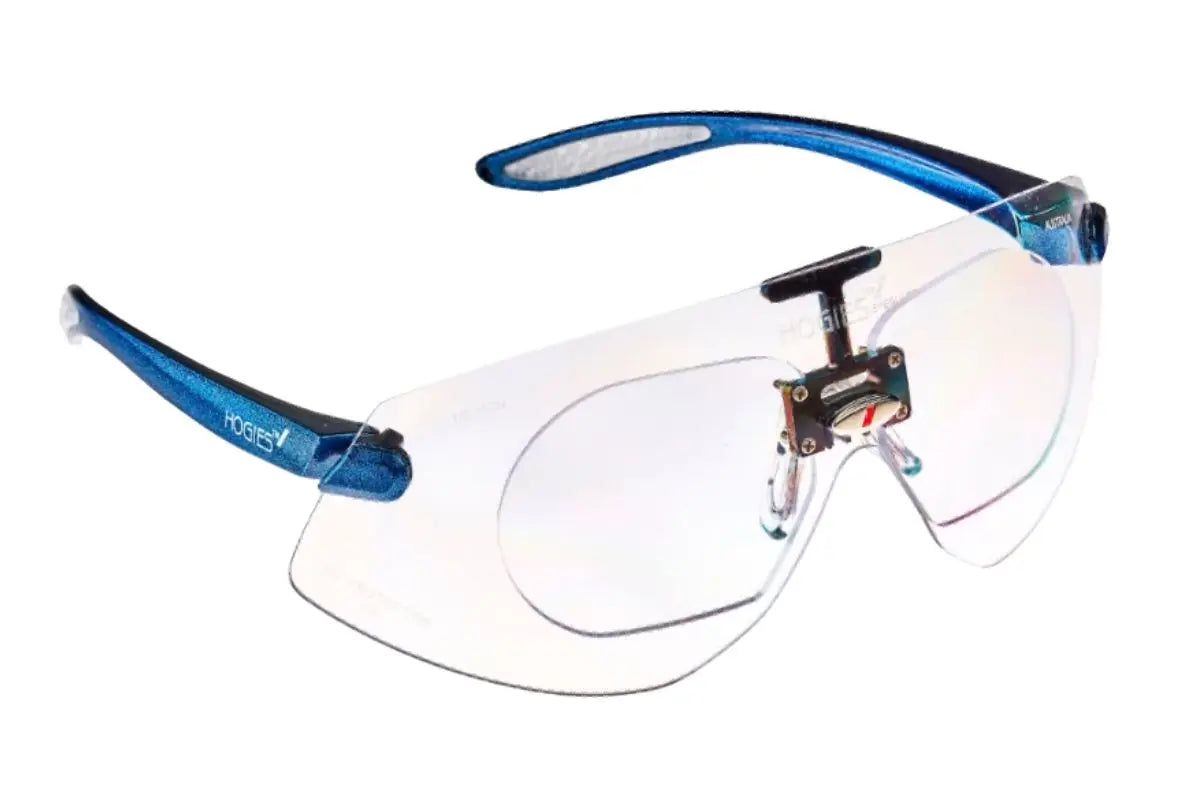
Or safety glasses with a removable RX insert.
Both provide vision correction. But they perform differently in stability, flexibility, cost, and long-term use.
Choosing the right solution depends on how and where you work.
Option 1: Fully Prescription Safety Glasses
Fully prescription safety glasses integrate corrective lenses directly into the certified safety frame.
This creates a single-layer system.
Advantages:
• No internal insert
• Cleaner visual field
• Fewer internal reflections
• Simple daily use
Limitations:
• Prescription is locked to one frame
• Higher cost if you require multiple frames
• Replacement requires full lens remake
• Less flexibility across different environments
Fully prescription safety glasses work well when you use one frame in one consistent setting.
Option 2: Safety Glasses with an RX Insert
An RX insert is a removable prescription carrier that sits behind the primary certified safety lens.
The outer lens remains protective eyewear.
The inner insert provides vision correction.
Advantages:
• One prescription across multiple frames
• Lower long-term cost when switching environments
• Easy lens updates if prescription changes
• Retains certified outer lens integrity
• Compatible across both Safety and Sports models
The Hogies RX Prescription Insert is a rimless click-in insert designed for compatibility across Hogies Safety and Sports eyewear platforms.
This means the same prescription insert can be used in:
• Hospitals and healthcare settings
• Dental and specialist clinics
• Laboratory environments
• Industrial workplaces
• Outdoor and sports environments
You do not need separate prescription safety glasses for each setting. One insert can move between compatible frames.
That flexibility reduces duplication and simplifies workflow.
Stability and Fogging Considerations
Prescription layering affects airflow.
Wearing standard glasses under safety glasses increases:
• Heat buildup
• Moisture retention
• Fogging
Integrated prescription safety glasses reduce layering.
RX inserts reduce bulk compared to double frames.
Because the same insert can be used across compatible Safety and Sports models, users maintain consistent prescription performance across environments without adding extra frame layers.
Frame geometry and hydrophobic lenses remain critical for reducing fogging.
For more on airflow and fog prevention, read Why Safety Glasses Fog and How to Prevent Safety Glasses Fogging Properly.
Cost and Long-Term Flexibility
If you require:
• Clinical eyewear during the week
• Industrial protection on site
• Sports eyewear for outdoor use
An RX insert system offers long-term flexibility.
Instead of purchasing multiple fully prescription safety glasses, you can use one prescription insert across compatible frames.
Benefits include:
• Lower long-term replacement cost
• Simplified prescription updates
• Consistent visual experience across environments
• Reduced need for duplicate prescription builds
If you work in one fixed environment and never switch frames, fully prescription safety glasses may be appropriate.
If you move between settings, an insert system provides adaptability.
Compliance and Certification
Regardless of the prescription method, the outer safety frame must remain certified.
Look for compliance with:
• AS/NZS 1337.1
• EN 166 Optical Class 1
Prescription correction should enhance protection, not replace it.
For guidance on evaluating certification, fit, and performance, read How to Choose the Right Safety Glasses.
To explore certified compatible frames, visit Hogies Safety Eyewear.
Which Option Is Better?
Choose fully prescription safety glasses if:
• You use one frame daily
• You do not change environments
• You prefer a single integrated system
Choose an RX insert system if:
• You use multiple Safety or Sports frames
• You move between clinical, industrial, and outdoor environments
• Your prescription changes periodically
• You want long-term cost efficiency
Both solutions must maintain certified protection, optical clarity, and stable fit.
Frequently Asked Questions
Are RX inserts as safe as prescription safety glasses?
Yes, provided the outer frame is certified and the insert is properly designed. The certified outer lens provides the primary protective function.
Can I use the same RX insert in Safety and Sports frames?
Yes. The Hogies RX Prescription Insert is designed for compatibility across selected Safety and Sports models, allowing one prescription insert to move between frames.
Do RX inserts cause more fogging?
Poorly designed inserts can restrict airflow. Balanced frame geometry and hydrophobic lenses reduce fogging risk.
Is an RX insert more cost-effective?
It can be more cost-efficient if you use multiple frames or expect prescription updates.
Final Word
Prescription safety solutions should enhance performance, not complicate it.
Whether you choose fully prescription safety glasses or a cross-compatible insert system, certified protection, optical clarity, and stable fit remain essential.
Explore compatible certified options within Hogies Safety Eyewear and select the configuration that matches your environment.
Share:
Surgical Loupes in Australia: Flip-Up and Through the Lens Compared
Padel vs Pickleball: 7 Real Differences and Which One to Try First