
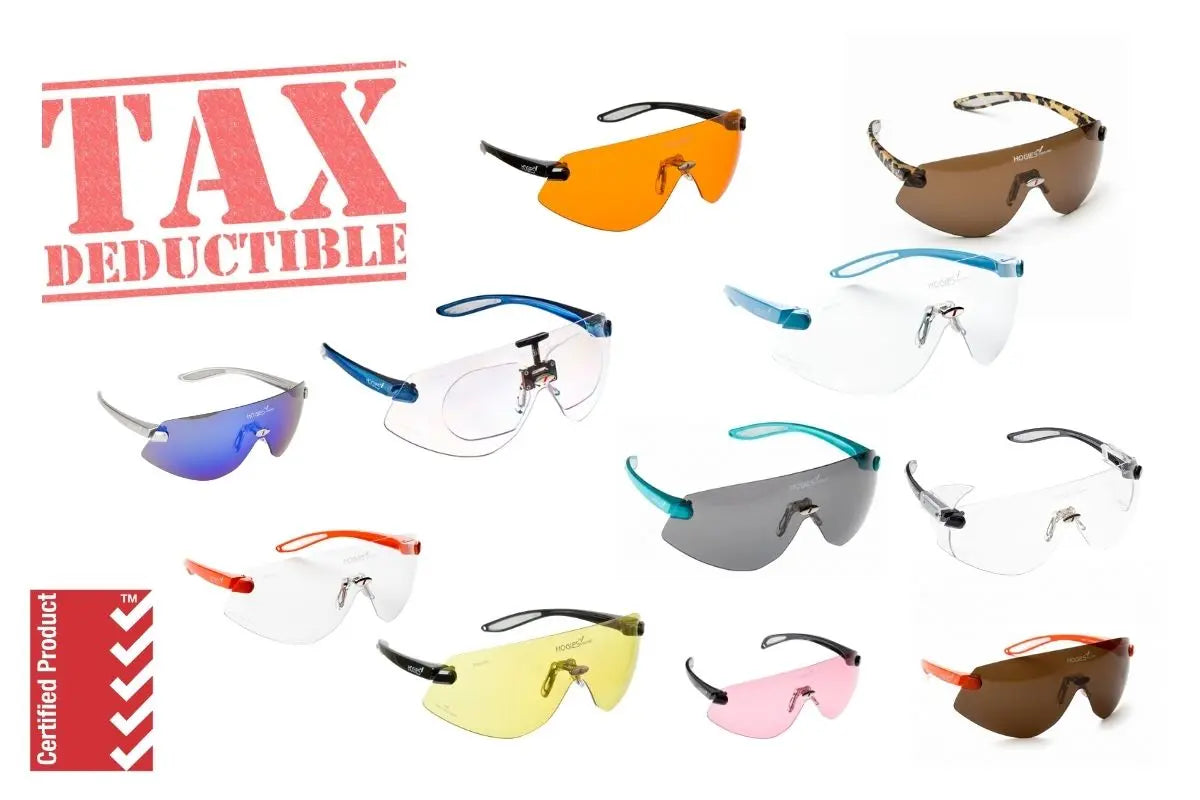
If you are required to wear protective safety glasses for work in Australia or New Zealand, you may be eligible to claim them as a tax deduction or business expense.
Eligibility depends on how the eyewear is used, whether it is mandatory for your role, and whether you paid for it yourself.
This guide explains when safety glasses may be deductible, who qualifies, and what documentation you need to keep.
If you need certified safety glasses for workplace use, you can view our full range of AS/NZS 1337.1 certified safety glasses here.
Quick Answer: Can You Claim Safety Glasses on Tax?
In Australia, safety glasses may be tax deductible if they are protective eyewear required for your job and you were not reimbursed.
In New Zealand, safety glasses may be claimed as a business expense if you are self employed or operating a business.
Standard prescription glasses are not deductible in either country.
Are Safety Glasses Tax Deductible in Australia?
Under Australian Taxation Office guidance, protective items can be claimed as a work-related deduction if they reduce a real and likely risk of injury in your work environment.
Safety glasses must be:
-
Specifically protective in nature
-
Required for your work duties
-
Purchased by you personally
-
Not reimbursed by your employer
-
Supported by a valid receipt
When You Can Claim Safety Glasses in Australia
You may be able to claim safety glasses if:
-
Eye protection is required under workplace safety rules
-
You work in trades, construction, warehousing, manufacturing, laboratory, or clinical environments
-
You paid for the safety glasses yourself
-
The eyewear is certified protective equipment such as AS/NZS 1337.1 compliant safety glasses
Learn more about what AS/NZS 1337.1 certification means for workplace safety.
If the glasses are used partly for private purposes, only the work-related portion can be claimed.
What You Cannot Claim in Australia
You cannot claim:
-
Standard prescription glasses used for everyday wear
-
Contact lenses
-
Fashion eyewear
-
Any item reimbursed by your employer
-
The private-use portion of mixed-use eyewear
The ATO clearly distinguishes between protective equipment and ordinary personal eyewear.
Are Safety Glasses a Deductible Business Expense in New Zealand?
New Zealand operates under different rules.
Employees generally cannot claim work-related expenses in their personal tax returns. However, self-employed individuals and businesses may deduct legitimate business expenses.
When Safety Glasses May Be Deductible in New Zealand
Safety glasses may qualify as a business expense if:
-
They are required for workplace health and safety
-
They are not suitable for normal everyday use
-
They are purchased specifically for business activities
-
You retain invoices and purchase records
Specialist protective eyewear used to meet safety obligations may fall into this category.
Australia vs New Zealand: Key Differences
| Australia | New Zealand | |
|---|---|---|
| Employees can claim | Yes, if eligible | Generally no |
| Business owners can claim | Yes | Yes |
| Must be protective equipment | Yes | Yes |
| Personal use deductible | No | No |
| Reimbursed items deductible | No | No |
*Eligibility always depends on individual circumstances.
Who Is Most Likely to Qualify?
You may qualify if you are:
-
A tradesperson required to wear certified eye protection
-
A warehouse or site worker using PPE
-
A contractor supplying your own safety equipment
-
A self-employed professional purchasing safety eyewear for business use
There must be a clear connection between the eyewear and your work duties.
Common Mistakes to Avoid When Claiming Safety Glasses
-
Claiming ordinary prescription glasses
-
Claiming eyewear reimbursed by your employer
-
Failing to keep receipts
-
Claiming the full cost when there is mixed personal use
Tax authorities require documentation and a direct link between the purchase and your employment or business activities.
Frequently Asked Questions About Claiming Safety Glasses
Are safety glasses tax deductible?
They may be deductible if they are certified protective eyewear required for work and meet relevant tax authority guidelines.
Can I claim prescription safety glasses?
In Australia, prescription safety glasses may be deductible if they are protective and required for your job. If you require vision correction, prescription safety inserts are available for compatible safety frames.
In New Zealand, prescription safety glasses may qualify as a business expense if they are specialist protective equipment used for business purposes.
Can I claim if my employer paid for them?
No. If your employer reimbursed or supplied the glasses, you cannot claim them personally.
Buying Certified Safety Glasses for Work
If you are required to wear eye protection at work, it is important to choose safety glasses that meet recognised standards.
Hogies safety eyewear is certified to AS/NZS 1337.1:2010 low impact protection and CE EN 166 Optical Class 1 standards, providing compliant workplace protection across clinical and industrial environments.
Explore the full range of certified clear safety glasses and patient protection eyewear designed for workplace and clinical environments.
If you require vision correction, prescription safety inserts are also available for compatible frames.
Important Disclaimer
This article provides general information only and does not constitute tax advice. Eligibility depends on your individual circumstances. Always consult the Australian Taxation Office, Inland Revenue, or a registered tax professional before making a claim.
Share:
What Are Safety Glasses and Why Are They Needed?
Why Safety Glasses Fog and How to Prevent It Properly