
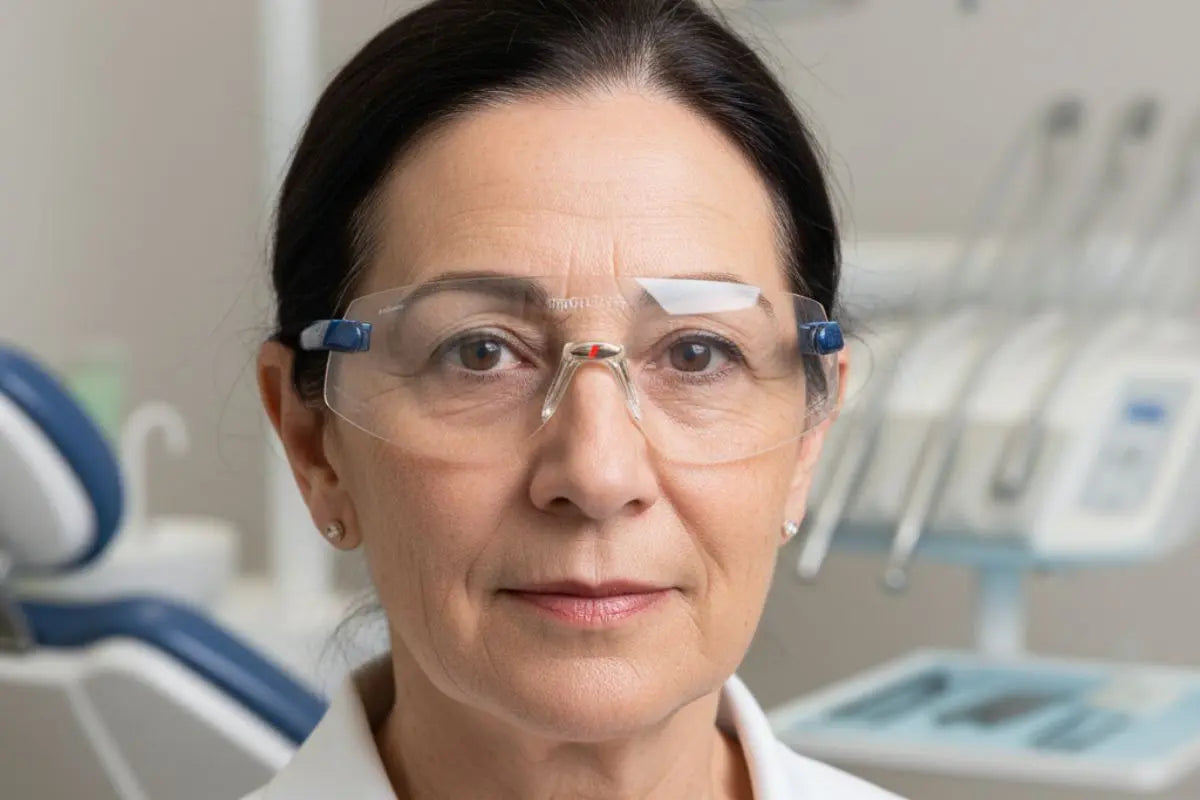
Safety glasses fog when heat and moisture become trapped behind the lens.
Most safety glasses fogging problems are not caused by the lens alone. They are caused by restricted airflow and temperature differences between the face and the surrounding environment.
Anti-fog sprays may offer short-term relief, but preventing safety glasses fogging requires proper frame design and moisture management.
If safety glasses fog at work, protection is reduced.
Why Safety Glasses Fog at Work
Safety glasses fog when warm, moist air from the face contacts a cooler lens surface.
This is common in:
• Hospitals and healthcare facilities
• Dental and specialist clinics
• Laboratory environments
• Industrial and workshop settings
Safety glasses fogging increases with:
• Mask use directing air upward
• Physical exertion
• Rapid temperature changes
• Frames that seal tightly against the skin
When airflow is restricted, condensation forms. When condensation forms, visibility drops.
If safety glasses must be removed to clear fog, they are no longer providing protection.
Why Anti-Fog Products Do Not Fully Prevent Fogging
Anti-fog wipes and sprays are often marketed as permanent solutions for fogging safety glasses.
In reality:
• Anti-fog treatments wear off
• Reapplication is required
• Residue may affect optical clarity
• Performance changes with humidity
They reduce symptoms. They do not correct poor ventilation.
If frame geometry traps heat, safety glasses will continue fogging regardless of temporary coatings.
The Real Way to Prevent Safety Glasses Fogging
Preventing safety glasses fogging starts with airflow.
Fog-resistant safety glasses should:
• Allow controlled air circulation
• Maintain certified coverage
• Avoid sealing tightly against the face
• Distribute weight evenly for stability
Balanced standoff design reduces heat buildup and moisture concentration behind the lens.
This is why true fog-resistant safety glasses rely on engineered airflow, not just surface treatments.
Why Hydrophobic Safety Lenses Are Important
Hydrophobic safety lenses repel moisture.
Instead of allowing water to spread across the lens surface and create a fog film, droplets bead and disperse more easily.
Hydrophobic performance helps:
• Reduce moisture adhesion
• Improve recovery after condensation
• Maintain optical Class 1 clarity
• Support long-shift visibility
Hydrophobic lenses do not make safety glasses fog-proof.
They support airflow design by reducing how long moisture remains on the lens surface.
When airflow and hydrophobic performance work together, safety glasses are far less likely to fog under normal working conditions.
Prescription Safety Glasses and Fogging
Layering prescription glasses under safety glasses increases fogging risk.
Double frames:
• Trap additional heat
• Restrict airflow
• Increase condensation surfaces
Integrated prescription systems reduce layering and improve ventilation.
For guidance on selecting prescription compatible safety glasses, read How to Choose the Right Safety Glasses.
What to Look for in Fog-Resistant Safety Glasses
If your safety glasses fog frequently, evaluate:
• Certified optical clarity
• Frame design that supports airflow
• Hydrophobic safety lenses
• Stable fit without excessive clamping
• Compatibility with mask use
Preventing safety glasses fogging requires design, not temporary fixes.
To explore certified fog-resistant safety glasses engineered for airflow and clarity, visit Hogies Safety Eyewear.
Frequently Asked Questions
Why do safety glasses fog when wearing a mask?
Masks direct warm air upward toward the lens. If airflow is restricted, safety glasses fog quickly due to condensation.
Are hydrophobic lenses the same as anti-fog coatings?
Hydrophobic lenses repel moisture. Anti-fog coatings typically absorb or spread condensation. Both help, but neither replaces proper airflow design.
Do anti-fog sprays permanently stop safety glasses fogging?
No. Most anti-fog sprays require reapplication and lose effectiveness over time.
How can I prevent safety glasses from fogging at work?
Choose certified safety glasses with balanced airflow design and hydrophobic lenses instead of relying only on sprays or wipes.
Final Word
Safety glasses fog when heat, moisture, and restricted airflow combine.
Preventing safety glasses fogging requires engineered frame geometry, certified optical clarity, and hydrophobic lens surfaces working together.
Explore professional solutions within Hogies Safety Eyewear and choose safety glasses designed to stay clear under pressure.
Share:
Are Safety Glasses Tax Deductible in Australia and New Zealand?
Dental Loupes and Prescription Changes: What Happens When Your Script Updates?